CSU Logo

Topic 8

Topic 8: The Diverse Reactions of People to Emergencies

Diverse reactions
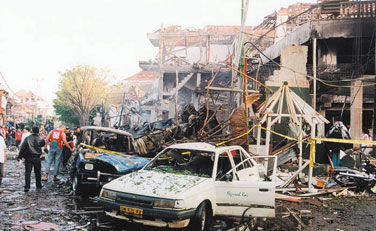
Photo: Bali nightclub bombing, 2002.

Bali nightclub bombing, 2002.

Source: www.patdollard.com/2008/02/philippine-marines-kill-bali-nightclub-bombing-mastermind/ accessed September 2010.

There are a number of myths relating to the way people and communities react in an emergency event. Some of these include the idea that people will panic and that children are too young to be affected. The EMA Recovery Manual 10 lists the myths on p.26. This chapter also outlines the experiences and feelings most commonly exhibited after an emergency event. It is a good idea to read through Chapters 5 and 6, from which I have extracted the following excerpt:

Common Experiences and Feelings

The effects of emergencies and disasters are very real. Strong feelings may arise when the experience is talked about. Increased worry may interfere with day-to-day living and the experience may leave people shaken and worried about the future. ‘Getting back to normal’ can be difficult after an experience of this kind.

Everyone’s reactions will not be the same; however, detailed below are some of the common feelings.

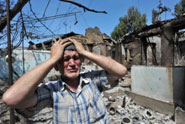
SHOCK

Photo: Man in shock

Source: Photo #439682
www.unmultimedia.org


  • disbelief at what has happened
  • numbness—the event may seem unreal, like a dream
  • no understanding of what has happened

FEARS

  • of damage to self, or death
  • of a similar event happening again
  • awareness of personal vulnerability
  • panicky feelings
  • other apparently unrelated fears

ANGER

  • at ‘who caused it’ or ‘allowed it to happen’
  • outrage at what has happened
  • at the injustice and senselessness of it all
  • generalised anger and irritability
  • and ‘why me!’

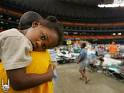
HELPLESSNESS

Photo: In the superdome after Hurricane Katrina

In the superdome after Hurricane Katrina

Source: www.irw.org


  • crises show us how powerless we are at times, as well as how strong

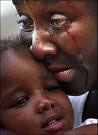
SADNESS

Photo: Sad mother

Source: www.photojournalism.org


  • about human destruction and losses of every kind
  • for loss of the belief that our world is safe and predictable

SHAME

  • for having been exposed as helpless, emotional and needing others
  • for not having reacted as one would have wished

GUILT

  • that some have not lost as much as others

(EMA 2004, Recovery, Manual 10, p27)

Top

Top

Top

Activity Icon


Activity 8.1: Defining trauma

  1. After reading through Readings 8.1 and 8.2 you should be in the position to construct your own definitions for the following:
     
    • Definition of individual trauma
    • Definition of collective trauma
  2. Both Readings referred to factors that may affect the mental health of a community following a disaster. List these factors, remembering that you may be noting them from the text as well as the sub-headings.
  3. Take a look down your list and mark off those you would expect to be significant for your community. Are there any additional factors you would include as significant for your community?
  4. Finally, write your comments regarding the significance of community characteristics in relation to constructing a community mental health plan following a disaster.

Print this activity

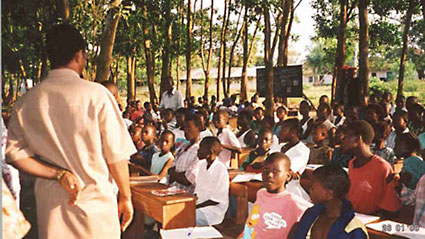
Photo: School Children in Sierra Leone

School Children in Sierra Leone

Source: http://www.worldbank.org/afr/afth2/crrp/ersf.html
accessed November 2007.

Top

Readings Icon


Textbook Reading: McEntire

McEntire Chapter 3, Anticipating human behaviour in disasters: Myths, exaggerations and realities.
David McEntire lives and works in the US. He has a strong background in emergency management response and recovery. There will be many small details in this text which will vary from your own country, state or locality. Try to grasp the overall essence of what McEntire is communicating and make connections with your own context. Following the instructions below, read Chapter 3 of your McEntire text.

  1. Take the pre test, accessed online through http://www.wiley.com/college/McEntire
  2. Complete the Summary, Review and Applying this chapter activities
  3. Take the post test, also accessed online through http://www.wiley.com/college/McEntire

Allow yourself approximately two hours to complete the reading and activities

Top

Readings Icon


Extension reading

Below are a number of papers focusing on community recovery from the Disaster Research Centre at the University of Delaware, where Dynes and Quarantelli wrote and taught. Despite their age, these articles still provide a valuable source of information on community recovery by seminal writers in the field.

Quarantelli, E. L. (1993). Human and group behaviour in the emergency period of disasters: Now And In The Future. Preliminary pager #196, University of Delaware Disaster Research Centre. Retrieved from University of Delaware Disaster Research Centre: http://dspace.udel.edu:8080/dspace/handle/19716/581?mode=simple

Dynes, Russell R. & Quarantelli, E. L. (1973). The family and community context of individual reactions to disaster. Preliminary pager #10, University of Delaware Disaster Research Centre. Retrieved from University of Delaware Disaster Research Centre: http://dspace.udel.edu:8080/dspace/handle/19716/400

Top

Back

Next