
The context of emergency management planning, training and education
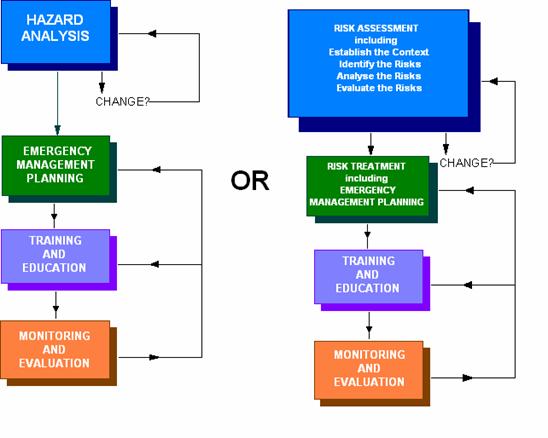
During the previous emergency management planning subjects you were introduced to an emergency prevention and preparedness model with which you should are now be familiar. The first two activities in this model were risk assessment/hazard analysis and emergency management planning.
The last two activities in the model are Training and Education and Monitoring and Evaluation.
These two activities are the focus of this subject and complete your study of emergency management planning. In these two remaining activities, we will specifically examine the development of Standard Operating Procedures (SOP), Training Analysis and Exercising. Before we commence our studies into these remaining activities within the emergency prevention and preparedness model, let us undertake a quick revision of the first two activities, risk assessment/hazard analysis and emergency management planning.
The purpose of a risk assessment/hazard analysis in the prevention and preparedness model is to provide information on hazards and risks and their likely effects on the community and environment.
Cast your mind back to EMG100 and also EMG101. What were the definitions for hazard and risk provided in those two subjects?
Hazard

Risk
The diagram below depicts the emergency prevention and preparedness
model first introduced to you in EMG101.
 |
Now, let us expand on the simple sequential relationship between the four activities in the model by carrying out some background reading and then answering a few questions.
Activity 1.2
|

You will have noticed that there are a number of similarities, both in countermeasures and special problem areas, between most of the disasters outlined.
It will also have been apparent that a number of the countermeasures and special problem areas could be addressed during the risk assessment/hazard analysis and emergency management planning activities.