
An introduction to standard operating procedures
In this section we will explore the context of standard operating procedures (SOP) within emergency management; in particular the relationship between SOP and emergency planning. As we shall see, this relationship is based on an understanding of the difference between strategy and tactics.
SOP are important for facilities such as emergency operations centres (EOCs) as we shall see in later sections. In preparation for this, we are going to examine the role of the EOC within emergency planning and management. Finally, we examine the nature of SOP and their particular functions - what they are, who needs them, and who prepares them.
The context of SOP
Before we consider just what SOP are and explore them in detail, let us examine the context of SOP within the emergency planning process. It would be prudent to review the planning process and confirm our knowledge of the various steps involved in producing an emergency management plan.
At this point, review your understanding of the planning process. Take a moment to reflect back on your work in EMG103 and write down what you consider a ‘plan’ to be.
A plan is .....

There are eight steps in the emergency management planning process that you studied during EMG103. Figure 2.1 below shows the eight steps in the emergency planning process.
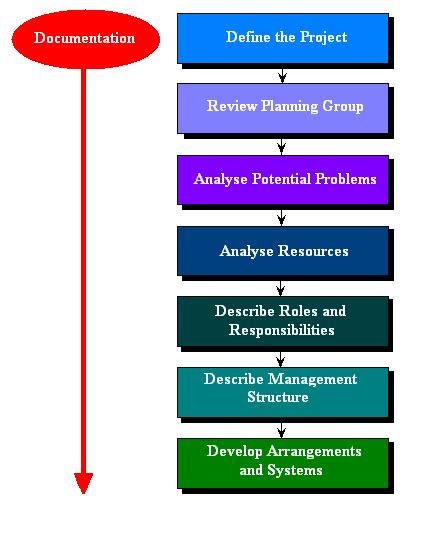 |
Figure 2.1: The Planning Process |
This diagram depicts the process you used to produce your plan - reflecting what needs to be done, (identified as resource needs), what resources were available and who would provide or facilitate their provision. The roles and responsibilities of various organisations was agreed and their commitment to the plan was obtained.
This plan is a strategic document as it involves more than one agency/organisation and specifies an all agency response in relation to the provision of resources.
You will have realised that the word ‘resources’ appears time and again in regard to the preparation of emergency management plans. It also plays a prominent part in the development and production of standard operating procedures.
Activity 2.1
|
