
Topic 2: What is community?
Community as competing interest groups
This perspective understands a community as comprising of a large number of interest groups each competing with another group or groups for resources, money, point of view, influence and so on. It’s worthwhile remembering that the individuals who belong to these groups may in some instances have views that are different from the group. They may also belong to more than one group.
These groups are in conflict since they may significantly differ and possess a range of different goals and values. This model of a community stems from a conflict approach in sociology.
Some examples of interest groups could include:
Political |
Conservationists, major parties, Councils |
Economic |
Unions, Chamber of Commerce, corporations, forestry industry |
Religious |
Christian, Islamic, Buddhist, Jewish and other many faiths. |
Ethnic/racial |
Indigenous groups, migrant organizations |
Other groups
Service Groups e.g. Rotary, Lions and so on
Conservation organisations e.g. Wilderness Society and Greenpeace
Feminist groups
Children’s organisations e.g. playgroups, child care centres
Sporting groups
Professional bodies
Examples of conflict between groups man include the following:
|
It’s worth remembering that individuals belonging to these groups may in some instances hold differing views from the rest of the group. They may also belong to more than one group.
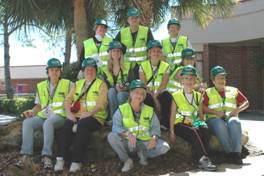
Here is an example of one community, the Alamonte Springs Emergency Response Team. Each person in this community is also a member of numerous other communities.
 |
|
Record your thoughts concerning the implications for the recovery capability of a community described as competing interest groups, if it was impacted with a large emergency.
|
|