
Topic 3: What happens to communities in disasters?
Bonding & debonding
Rob Gordon has described bonding and debonding in communities struck by an emergency. Have a look at the diagram below to see how debonding occurs in a community after a disaster such as an earthquake, flood or fire.
Rob Gordon has illustrated a community as per Figure 3.1 below.
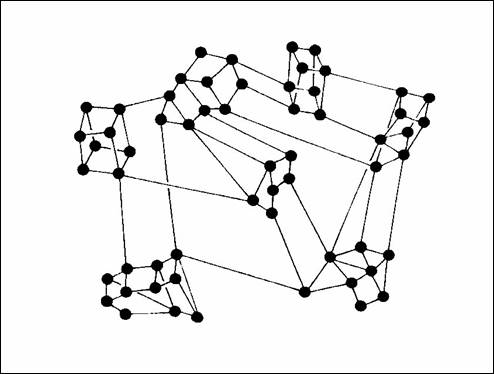
Figure 3.1: Schematic representation of community bonds forming a structure of sub-systems
Figure 3.2 below shows how debonding occurs in the instance of an area disaster such as an earthquake, flood or fire, where a region is affected.
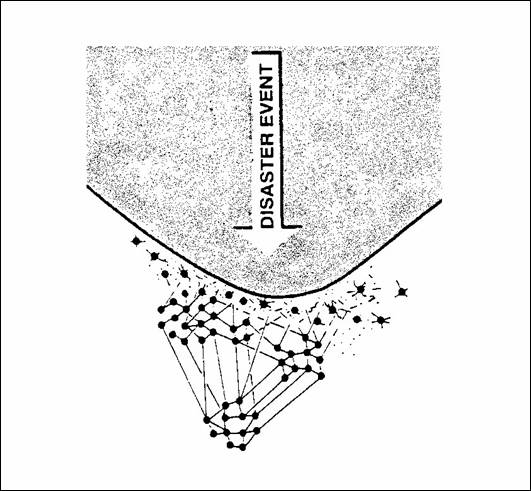
Figure 3.2: Debonding of community structures on impact of an area disaster.
Debonding occurs in an event or a disaster such as a transport accident or terrorist attack. The effect is like a sharp instrument which devastates a segment of a community but may still have far reaching effects to the whole community.
This is illustrated in Figure 3.3 below.
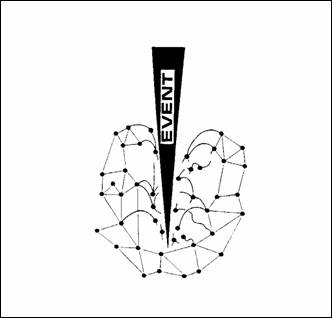
Figure 3.3: Debonding of community structures on impact of disaster
In the immediate aftermath of a disaster the broken pre-disaster bonds are replaced by new "survival" bonds and a new community structure rapidly develops. Relationships are based on comradeship, intense emotion and survival needs. These links do not acknowledge peoples’ differences, which the pre-disaster structure reflected.
This process is known as rebonding and fusion, illustrated in Figures 3.4 and 3.5 below.
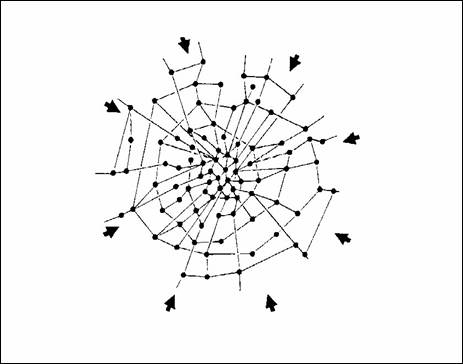
Figure 3.4: Community rebonding following an area disaster creating a state of confusion.
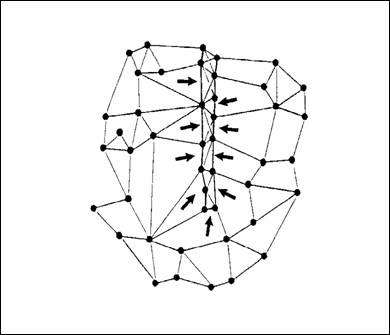
Figure 3.5: Rebonding and fusion of affected structures in an event disaster.
Notice that the lattice structure has gone and is replaced by a closely drawn "web" structure.
With an event disaster, affected structures fuse along the line of disaster impact, whilst surrounding structures generally remain intact. The fusing is likened to human scar tissue which pulls and interferes with the functioning of closely neighbouring bonds.
Figures 3.6 & 3.7 illustrate the concept of fusion:
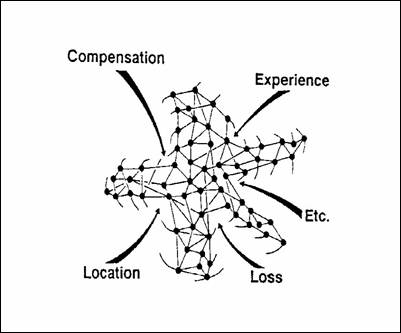
Figure 3.6: Differentiation of the community
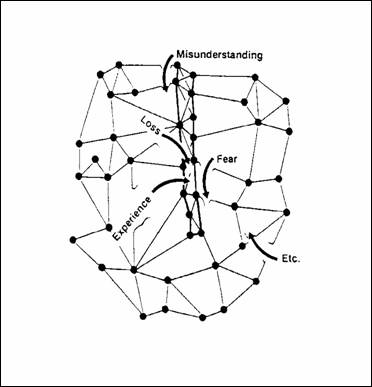
Figure 3.7: Differentiation of a community with fused structures along cleavage planes in an event disaster.
Those directly affected by a disaster develop a shared culture of stories, incidents, symbols and memories unique to them. This is termed fusion (see Figure 3.7 above) and has a number of consequences, some beneficial, others destructive.
The fused community acts with unanimity and is cohesive, combining the efforts of many people without disputes or disagreements. People often focus on the needs of others and ignore their own misfortune.
Less constructive consequences can include:
- A lack of interpersonal distance and privacy.
- People may commit themselves to the recovery process without regard for their own needs and then feel obligated or unable to attend to, or sort out, their own personal and family life.
- Fusion sets up unrealistic personal and community expectations that are impossible to meet and which may lead to tensions and conflict later.
Anyone in the affected community not participating in the recovery may be alienated and seen as "not one of us" and "not being able to understand".
Incoming workers not directly affected by the disaster may have difficulty gaining acceptance.
Tensions between sub-groups or between the severely affected and less affected parts of the community may develop.
People are likely to over value and exaggerate their capacities to "rebuild" and reject or not seek help.
The fusion is unstable and it cannot provide for the longer term needs of the community since it is an "artificial structure" formed by intense need and emotion. The community must re-establish when the disaster is over.
There are three (3) main forces which destabilise the fusion:
- The need to shift from survival focus to recovery requires a variety of short term and longer term services and agencies moving into the community. These services, agencies and their personnel are new to the community and have foreign ways of operating and working.
- The second force is the re-establishment of pre-disaster services. These were not designed to meet disaster needs and services must assess how they were affected by the disaster and how they can carry out their tasks and functions in the future. They must re-establish formal communication channels and procedures which now can be seen by the community as unnecessary and overly bureaucratic in comparison with the emotional high of the situation.
- The third force operating against fusion results from emotional reaction of community members. The unity is soon broken by the differences which naturally separate people; conflicts occur as feelings of anger and blame surface and peoples different needs become more apparent.
These three forces struggle at the same time in the same space with the same people and the same resources. Feelings of distrust, envy, hate and jealousy emerge. Disappointment and cynicism lead to distances between people and groups of people widening. Power battles develop over issues such as compensation. Historical pre-disaster conflicts may re-emerge. These emotions continue through the recovery process as various issues appear.
These differences are known as cleavage planes, as previously illustrated by Figures 3.6 and 3.7.
In event disasters, for example an office shooting, those in the office at the time of the incident talk about the event for a long time afterwards. Those who were not there at the time are unable to understand this and may feel that "a fuss is being made about nothing". Comments such as "haven't you got over this yet?" may be heard.
Cleavage planes develop between groups of different interests, backgrounds and attitudes. Issues such as loss, grief and compensation cause cleavage planes, differences which separate and define pre-disaster community structures.
In addition to cleavage planes, complex shear stresses impact on the community. Whilst old structures are rebuilding, new ones develop. Recovery cannot be a return to the pre-disaster state, for lots of reasons including lost history, memories, heirlooms, dreams and so on.
Those whose circumstances were favourable wish to hold on to the past, whereas those whose circumstances were less favourable may see this as an opportunity to redress inequalities, achieve dreams and so on. The old and new structures are in conflict.