
Topic 3: What happens to communities in disasters?
Disaster repercussions process
Disasters may also be viewed as a series of impacts after the initial physical event, illustrated in Figure 3.8 below.
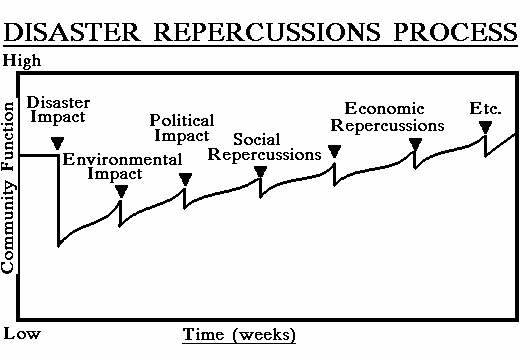
Figure 3.8: The disaster process with multiple impacts reducing community function.
- Recovery is an enabling process which allows individuals, families and communities to attain an improved level of functioning by the provision of information, resources and specialist services.
- Recovery commences from the moment of disaster.
- Human services agencies play key roles in recovery.
- Recovery is lengthy, complex and the process is dynamic. The needs of peoples and communities change with time.
- People affected by a disaster have a right to expect that they will be treated with dignity.
- Recovery requires planning and management arrangements to be understood and accepted by the community, combat services and recovery agencies.
- Recovery needs to involve local community by participation in decision making, reliance on local resources and expertise where possible.
- Recovery must use all of the resources available.
- Recovery agencies/managers need to utilise and be aware of knowledge and expertise from many sources.
- Recovery must be timely, fair, equitable and flexible.

 |
|
Paton and Johnson describe a model of resilience to hazard effects in relation to a number of communities. In the light of your own experience, what is your opinion of their model - do you think it is useful? Why or why not? |
|